After 32 years in various management positions with Columbia Grain International (GCI), Kurt Haarmann recently ascended to the captain’s seat of the Portland, Oregon, US-based company. His mission: navigate CGI through an extremely challenging business environment and focus on growing the company’s already successful and well-established core segments.
Japan-based parent company Marubeni Corp. and the CGI board of directors announced in August 2025 that Haarmann would replace Jeff Van Pevenage as president and chief executive officer when he stepped down on Sept. 1, saying the decision “reflects a refreshed strategic direction for CGI and is not a reflection of performance.”
Asked in a recent interview with World Grain what the change of direction entailed, Haarmann replied, “Historically, we had always been in kind of a slow growth model, but in recent years we tried to accelerate that. We tried to get further downstream into things like retail packaging ventures and direct-to-consumer things, and we weren’t terribly successful in those. The lesson learned from that is that we have good core knowledge within our core business.
“Going forward, we will return to a little bit more of a slow growth mode — continue to grow our asset base, continue to invest in the business, but look for our growth downstream to be in strategic partnerships.”
Haarmann joined CGI in 1993, and during his years of service to Marubeni Group Companies, he has experienced all aspects of CGI’s business. He began his career with CGI in Colfax, Washington, US, and after moving to Portland, he took on roles involved in international bulk grain merchandising and team management.
In 2014, Haarmann left CGI to lead the wheat team at the newly formed Pacificor, LLC, as senior vice president of merchandising. He returned to CGI in 2018 and led a company reorganization as the senior vice president of grain and oilseeds. Five months before being named CEO, Haarmann was named chief commercial officer, overseeing all merchandising, freight and logistics.
The list of challenges facing Haarmann and CGI is long and includes a smaller-than-desired labour pool, economic headwinds facing farmers, including the inflationary impacts of inputs, keeping business costs under control, and, of course, the unpredictable impact of tariffs and trade wars.
“There’s a lot of whiplash,” said Haarmann, describing the constantly changing tariffs and counter-tariffs being imposed by countries during the nearly yearlong global trade war instigated by US President Donald Trump. “We have tariffs that are threatened, then they are pulled back, then they’re put back in place. You’ve got a lot of chips on the table that you’re trying to position during this uncertain environment, as do growers.”
A leader in pulses
CGI, a leader in origination, processing, and distribution of bulk grains, pulses, edible beans, oilseeds and organic crops for the US and global markets since 1978, has expanded its specialty crops business in recent years. Starting in 2005, CGI’s commitment to the pulse industry was critical to expanding the production of lentils and peas.
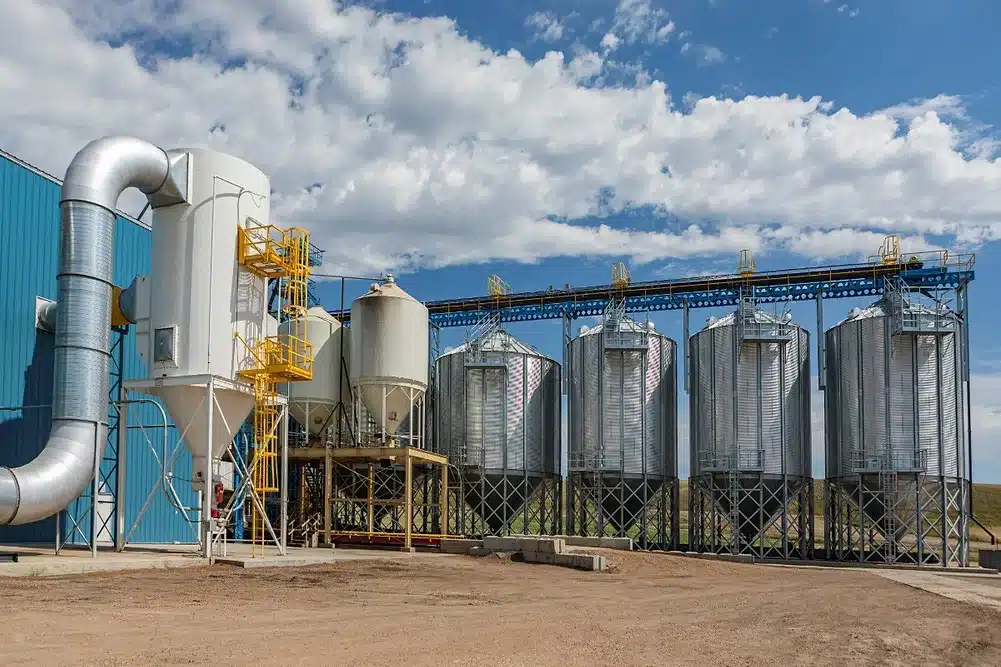
As one of the largest producers and exporters of pulses in the United States, CGI has invested in eight processing facilities in which pulse crops are cleaned, bagged and distributed worldwide. Most of its processing facilities and pulse producers that supply them are in the northern tier of the United States, stretching from Washington to Minnesota.
Haarmann said under his watch GGI will continue to be a major player in pulses.
“Last year and this year have been pretty difficult for everybody in the pulse industry, both internationally and within North America,” he said. “With the trade disruptions, the massive global supply and pretty significant global competition, there is an oversupply and probably an overcapacity even on the processing end.”
That’s the immediate and perhaps short-term outlook. But Haarmann is much more bullish about the long-term prospects of the pulse sector.
“As we look forward and look at the growth of pulse consumption, particularly domestically but also on an international basis, we see continued growth there,” Haarmann said. “I think one of the opportunities that will come for us is as the industry retrenches, we have historically grown well during times of consolidation.”
He said much of the growth will come from the increased desire among consumers for clean-label products. The recently revised food pyramid in the United States included a greater emphasis on protein, although meat-based protein was promoted more than plant-based offerings.
“Obviously, the latest food pyramid was kind of a double-edged sword for our business,” he said. “The good news is it does put the focus back on the protein element of pulses. Of course, when Americans generally think of protein, they think of a big steak, beef or chicken. But along with that, you put legumes in there, and people start to realize it’s a pretty cost-effective means of protein.
“We have to continue to push to try to find ways to make it easier to consume pulses — whether that’s pre-mixed, pre-packaged, or consumer-ready offerings.”
Opportunities overseas
Regarding its overseas markets, Haarmann sees tremendous potential, particularly in Asia.
“India obviously kind of drives not only global production, but also global consumption,” he said. “And they continue to have pretty good annual growth in consumption, both because of a growing population (India has overtaken China as the largest in the world), and continuing growth in the propensity to consume and the ability to consume. China is a key market as well. We do green peas there as well as in South Asia.
“We do chickpeas in Europe as well as the Middle East, India and Pakistan. We do a lot of green lentils in Europe and South America as well. Edible beans are primarily targeted to the North American market, but also a little bit in Latin America.”
Maximizing its potential in those markets will not come to fruition for CGI if the Trump administration continues imposing tariffs and doing so in such an unpredictable manner, he said.
“Agriculture needs a free trade policy,” Haarmann said. “We need open markets internationally. Within that is whether there are going to be trade restrictions; they have to be predictable, they have to be put in place and known so that markets can adjust. And if a grower is going to face an overseas tariff, they need to know what the price is so they can decide whether they can make a living growing that product at that price — and knowing that prior to planting it.
Image Credit: ©COLUMBIA GRAIN INTERNATIONAL